
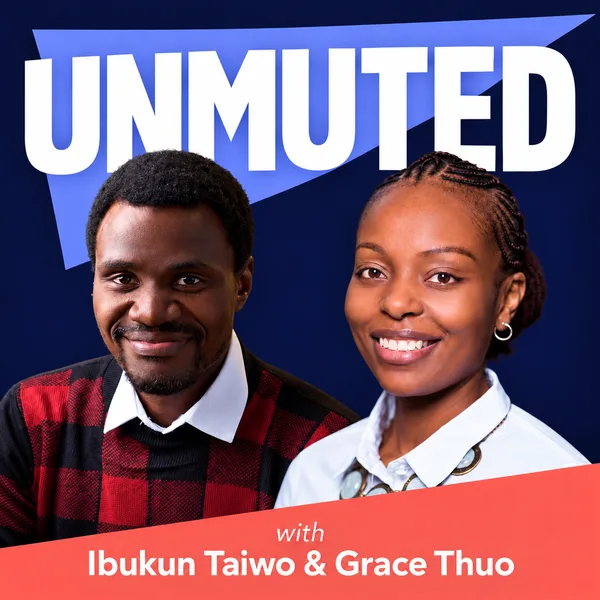
S1 · E04 / 51 min
Media Relations and Thought Leadership
Important work does not automatically make a publishable story. Francis Ayeko joins Ibukun and Grace to talk pitches, relationships and op-eds with a clear argument.
1 Oct 2026Originally streamed on LinkedIn ·
Listen here using Spotify’s player, or open the episode on Spotify.
Player not starting in this browser? Open this episode on Spotify (opens in a new tab)
In this conversation
What makes an editor pay attention? Francis Ayeko joins Ibukun and Grace to examine the gap between work an organisation values and a story that matters to a publication’s readers.
They discuss timeliness, specific human impact and finding stories while a programme is still under way. Francis also describes a patient approach to media relationships: learn who covers your sector and be useful before you need coverage.
The final part turns to opinion writing and pitching. What is the argument? Why now? Where does the piece fit? The conversation includes Francis’s experience of Kenyan newsrooms, following up and learning a publication’s requirements before submitting.
Ideas to take back to work
- Make it clear why a story matters now and what has changed for the people involved.
- Look for meaningful milestones during a programme instead of waiting for the final report.
- Build relationships by following a journalist’s work and offering useful context before asking for coverage.
- Give an op-ed a clear position supported by evidence, and tailor it to the publication.
Transcript
Machine-generated transcript. This text was produced from the final audio and checked for broad coverage and obvious errors, but it may contain mistakes. Speaker identities have not been verified.
Hello, I'm Ibukun, and I am Grace. We are the hosts of Unmuted Comms, a podcast for comms leaders by comms leaders. This is a podcast about the leadership, influence, and decisions behind great non-profit communication. We have candid conversations about what it takes to lead communications in the non-profits sector. These include things like building strong teams, advising executives, initiatives, navigating organizational dynamics and influence and making comms a more strategic force for mission and impact.
Hi. Okay. I think we're live. Hi everyone. Glad to have you here with us. Hi Grace. How's it going? Good. Good. Good to have all of you here. Good to see Ibukun. And it's a pleasure. How have you been keeping? It's been good. Good weather. Yeah. normal comms work stress but aside from that, no complaints. I can see it reflected in your strapline very strongly you know you're not making any logos bigger so good good okay so uh what are we talking about today? Today we are talking about um media today that's what we're gonna be talking about media we are gonna be i mean it's one of those things you think you know and you imagine
you know, but how can it become better? We have seen a lot of changes in the media right from when AI really started becoming content center and all the different shifts in political and this and that on the news. So we get to interact with the press, but it's very difficult to understand sometimes how to do it successfully. And in an ever-changing global environment, it's one of those things that can really trip you up. and there's some organizations which have got a dedicated media person and then those ones which often, as many of us will find ourselves, we do this role alongside other comms activities that we are doing. So what is it that journalists are looking for? What are they thinking? What
is it and everything else in between that in relation to media relations. So over to you, Ibukun. So, we have a guest. Let me just quickly bring him on. Hi Francis. Great to have you here with us. So Francis Ayeko is kindred spirit because he's a journalist. He's an ex-journalist as am I. He's more of a journalist than I am because he has been a journalist for over two decades.
he's also very experienced at writing, placing op-eds. Having placed over 100 that's 1 0 0 op-ed's that's probably more than some of us will ever even write over the course of our careers but I'm going to let him introduce himself properly right now so Mr Francis over to you Thank you Ibukun and a very warm afternoon everyone thank you for that wonderful introduction I have to say that 100 op-eds really sounds very impressive until you hear some of the stories behind some of those op-ed. Many other times when some of them had to stay with the editor for over one week and had to do some follow-ups before they could get published, you know,
You know, when you're waiting, you are expecting the edit event to send you an email telling you about the status of what you've submitted. But, you know, you wait and wait and wait and nothing is coming. Sometimes you feel like giving up but then, yeah, that's the nature of the game. So it's a game to be played so to speak. work. So I'm Francis Ayeko, I've spent 25 years in Kenyan newsrooms first as a reporter at the National Media Group and then secondly as an editor in The Standard. In both media houses I spent just slightly over 20 years combined so what that practically means is that I've been
on both sides of your pitch or the pitch, or the desk as they call it. And again what does that mean even for us right now? Yeah, it means yes, that journalists who trust your press release even without treating it beyond the first paragraph and again as a reporter then and that editor who actually published that story that transformed some conversation about policy engagement. So three years ago, I decided to step out of the newsroom and I started the Op-Ed Experts. And this is a new business, yes, only three years old, but then the experience
behind it is more than two decades. So, it's an accumulation of what I've learned both as a journalist and as an editor. So at the Op-Ed Experts, I work with executives and comms specialists like those who are in this room and what I do is to help them build thought leadership through strategic media engagement.
I do that in two ways. The first way I do that is through a cohort-based op-ed writing training, we call it Opinion Writing for Impact and Income and then I also do that through op-eds ghostwriting and the op-edes ghostwriting meeting is what has generated those 100 pieces I've talked about there. And those are pieces I've written on behalf of top executives. Yes, so I'm really excited to be here and looking forward to this conversation. Why? Because the questions that Grace and Ibukun have put together are exactly the ones I wish more comms professionals were asking. So thank you very much, and I'm glad to be here. We are going to tackle those things together.
Awesome. Thank you so much for that introduction and something that you have said that has stuck with me where you've said, and this is not to try and minimize it, but this is like a game, this pitching, writing, pitching, pitching waiting, the wait is like a game that you have to learn the rules of the game. And perhaps you can start us off in terms of what exactly, you know, you are a journalist and you received a lot of, you sent, you received stories, yes, you receive a lot content, but also as an editor. And so looking at that from both lenses, when you receive your pitch, what do you actually look for in the first 10 Thank you very much, Grace. In short I just ask myself one question. The first question, maybe two questions, the first question I ask is that why does this matter today? Why does it matter now? In news writing that is called timeliness. Why should I run this today and not wait until two months later or why didn't it come two months before or a month before?
law. So timeliness is very, very important. It has to be relevant to what we are talking about now. Now if that is answered and I get the answer to that question by just looking at the headline and perhaps reading the first few lines of the story. Now, if I get interested – I'm like okay, I think this is timely – then the next question I ask or the next thing I consider is their story here. I'm looking at specificity, I'm not looking for generalization so there has to be a story yes it might the idea might be timely but we might end up not having a story there so what do I mean by having a story? So you have to be specific I you need to show me a reason to publish apart from timeliness you have show me a reason that if the story
is about you or about the organization. Maybe you're telling me that this is a leading nonprofit working on maybe to transform food chains or something like that. You know, that is about the organization. But if you lead with something specific that shows the impact of your work, what you do, like maybe one out of three children will not see their fifth birthday because of this and that. You know, that is a story. It starts with something substantial, something that is related, somebody can relate to and they're like, oh, okay, what is that about? So it's not about the organization, it's about the impact of the organization. You are showing how your work is impacting the society.
So that way, I'll pay attention. And you need to lead with that. You need to start with that. So basically, somewhere in the story, we'll quote someone from your organization if that is the issue. It's normally a big issue. So starting with something substantial, show something that is newsworthy, is important. That would get me interested in reading the story and it would show me the story there. So roughly, the formula could be something like this. You start with something arresting and then you connect it to what is happening. That is the timeliness.
So the example I was giving about starting with maybe some startling statistic about maybe one in every three children will not see their fifth birthday because of this and that, you know, startling enough. It gets me into the story. And then, you have to connect it with something that is happening. That is in the news. I see. Okay, and I know Ibukun has got a follow-up question to that. And perhaps Ibuk can ask his before I come in because I also have something to ask to clarify about that but just go ahead Ibukun first.
No, please go ahead shoot your question. No no it was actually because when I am putting sitting on this side and I'm putting together this pitch. I always think, oh, this is a fantastic angle. I mean, like the editor must see it. Like, I mean surely, surely, they must see. So I'm here struggling with that statement of start with something that will catch your attention because whatever I'm putting down, I'm genuinely thinking this is it. This should catch your intention right from there go. So perhaps that's the clarity that needs to come out so that we're sure even what you're putting in, down. We are not living in our heads, you know, so to speak. Yeah, so that's the clarity
that I'm struggling with, yeah. Very true. I can clarify that before he shoots his question. So we have some characteristics we use to filter a story. It should meet some criteria. But let me, before I forget, let me say, first say that, you know, we are usually very close to our stories. So when I'm writing a story, I'm convinced that, oh, okay, this is the best story I will have ever written, you you know, only for someone to puncture that idea I have and they're like what is this you've written? You know. So we are usually very close to the stories that we write, the stories about
our organization and maybe you're working for an organization as a comm specialist you know, you have bosses and you sat and had a meeting, you're like this is a good story, story. The boss says so, and you're also getting convinced it's a good story. But the thing is, you need to look at it from the reader's perspective. What is the need for the reader? Not just for you. So I was talking about the characteristics. You need to look at the timeliness as we have said. The idea or the angle you are suggesting you want to pitch has to be prominent enough. You know, it's about something that affects many people.
Then it has to relatable. That means anybody who reads the story can identify what the story is about. So those are just some of the things we look into generally when you're deciding whether a story can go or not. Let me say when you are trying to play the editor, leader. How objective is it? So, yeah, you need to detach yourself a little bit from the story and just ask yourself, okay, if I was on the other side, if not the one writing, if I wasn't the one pitching, if i was the reader, would I read this story? Would it speak to me? That's a good test even if you forget about the characteristics I'm talking about, So just try to assume that you are the reader. Would it be something that you think can change your life? Because stories are supposed to transform.
I think that's where a big issue is, because when I'm writing it and as you say, you're close to it and you're thinking, yeah, I can read this. If I saw this in a newspaper, I could read it. And then the editor comes and tells you something different. But come in Ibukun. I know we've got other questions on the same. Yeah, but just to ask something small. If you are not sure, can you give it to someone neutral? Someone who perhaps is not in your field? Test it with someone and, you know, ask them for their genuine opinion about that. Is this something that speaks to them? Two or three people can help you do that.
which speaks to the reason why you need more than one person in the comms department, right? So one person is the author, one person's editor, which is how it works in newsrooms anyway. Right? So someone writes and then the editor sort of helps you review. Okay, so just moving on because we're still going to come back to that around framing to dig into how to do that a bit more practically. But for now I think my own question would be so I work in nonprofit space and our work is mission-based you know we have to save the world type of work obviously very important work but then why do so many nonprofits pitches and stories fail to get media coverage even when you know the work
work is important, but not all the important work is getting covered. So could you speak to that? A very good question and I'll start with where you have ended it. Even when the work is, the work that the organization is doing is important. So I have two reasons why why I think some stories are not published even though the work might be important. Because one, journalists and editors are not looking for important work that you're doing. They're looking for stories that they can share with their readers.
and a publishable story is not necessarily the important work you are doing. I'll go back to something I've said earlier, we write, I mean journalists are looking for impact. If you can show the impact of the work you're doing in other people's lives then you have a story there. So let me give you a practical example. So we have this organization that does what? It has nutrition programs and it serves communities. You come to me and you tell me, my organization has a nutrition program and it's doing this among communities.
is helping so many people, you know, all that. Yeah, I'll listen to you, yeah, okay. Then they might not ask you, obviously, but they might ask themselves, okay, that annoying question, so what? You told me, you have an organization or the organization you work for is having a nutrition program and you are helping many people. So what? What is the story? It's normally a rude question, but it's important and it's one of the filters editors use. Because you're not telling me a story. You are not telling me the impact this thing is making. But if you told me something like, uh-huh, our organization, maybe you start with a face. And good stories normally start with faces. And faces are the beneficiaries of your services.
So you tell me, this woman called, this lady called Amina in Marsabit. So until the other time, the other day, Amina used to walk about 10 kilometers to go and fetch water. But then our organization built a water pan or something like that or a borehole is better, a bore hole. And because of that Amina no longer walks those many kilometers to go and fetch water. Then you give me statistics showing that it's not only Amina but in that region we have about 200 people or even 200,000 people who are suffering the fate Amina used to suffer. And we are doing it one borehole at a time to make sure
that we alleviate the problem. You know, we are now beginning to talk. That is now a story. It's not about the nutrition program you're telling me about. That was about an important thing you are doing as an organization but you're not showing me the impact. Editors and reporters and journalists are looking for impact. How does what you do translate into helping people? What can you show for what you do. If you are pitching, that's where the story is. That's one reason. The second reason why you might be doing an important thing as an organization but it's not attracting media attention is that the reality of nonprofits is that your programs are long-term, most
of them are long-term. So you start a project, it goes for about five years, you know, must we wait until the end of the five years and we say okay now we have a story, we are somewhere with this, we can now reveal to the world what we have been doing. No. As a comms person you need to monitor in course the long program you have and whenever there's some good turning point, some milestone, maybe even some studies, even some survey has been done in the process of implementing the five-year program. You pick something that you know can be newsworthy and you look for a new spec, something that would be attractive. Let's say a study has been released, you are into the second year of the program and you've done some baseline study, you know,
and you found out something. Now, you can glean out something from that finding and get a new spec and share with the media as a page. So most of the time I don't think that happens among non-profits and you have very important things in the process of implementing a long-term project and you forget to pick out something in the process of doing this, that can be a new sped. In my opinion.
Yeah. I think Grace and I even had a conversation around that waiting until the report is ready versus telling stories intermittently. So I'm very glad that you mentioned that. I'm going to move to the second question that I'm asking on behalf of myself, and so on behalf of someone who reached out to me recently. And that's building relationships with the media. So beyond just pitching, a lot of media engagement comes down to relationships and trust you that you build with the press, editors, journalists. One of my favorite TV series ever is Newsroom which was on HBO I think about 10 years ago. It was a very good show, it was about journalists
and just how the madness of the newsroom is. One my interesting observations from that show was just how much newsroom work involves relationships outside the news room. You need relationships with experts, need a relationship with government people and all that. Now from the other side as comms people we also that means we do need to have relationships strong relationships with the media so the first question I want to ask you is a foundational question if you were starting out today fresh based on all things that you know how would you start building such relationships with the press? You know how can a new comms person let's say i just got my first comms job you know
and I want to start building some external relations. How would you go about it? Okay, a great question. So if I was starting today as a comms person maybe I need to consider doing that the first thing I would do is I would start building relationships by being useful even before I need something. So in practical sense, what does this mean? Or let me just put a rider there.
Most of the time people, and I've experienced this a lot, someone whom you don't know, they just pop up out of nowhere and they're like, oh, I was given air contact by so and so. And before you know it, they are pitching a story. So that's not how to build relationships. You build relationships by, first of all, showing that you can offer something and what you can offer initially is not necessarily a pitch. So I would start by being genuinely useful to the journalists before I'm needed.
said. You should not start by just pitching and you should not look at it as a transaction arrangement kind of thing. You need to, first of all, be keen on who covers your sector. sector, I would be keen to know who exactly among the journalists covers my sector. So I do my basic background research, I note down who they are, then I start following them on social media, thank God for social media.
I start follow them on a social media commenting on, okay first of all you identify them, then when you identify the work they do, and once you connect with them, comment on their stories. Other than commenting on their story, genuine comments, still nothing, apart from commenting on their Stories, do things like, you know a lot in your sector. So sometimes you can even offer for free if you have some statistics you can share with with them, without pitching anything. You are still building relationships with them. Share with them what you have. Sometimes give them a heads up if there's something going on and you can reach out to them and ask them how about this? Have you ever looked at it this
way, you know. You're building a relationship. How I would do it specifically and in a more practical sense, I would identify like about five of them. Then do the things that I've said, you follow them, you comment on their stories. Genuinely, I'm not talking about, you just make make a comment for the sake of being seen. No, you are very genuine about building a long-lasting relationship. So practically I would identify about five journalists who regularly cover my sector and then read everything they have written. After that I'll follow them and then I build this relationship progressively until we get somewhere where if I have something
being genuine. They will not see me as someone who just want to use them, they'll see me as a true partner and you know it's your sector so sometimes you can even suggest to them that by the way I've seen this trending and I thought it would be a good story for you. I mean have you ever considered this? And you'll even be available to provide some insights, and even maybe a speaker, a spokesperson. Sometimes it can even be someone from your own organization. So that's how I would start by seriously building relationships. I would give myself like about three months to do this, but I make sure that I know who covers my sector and I follow them, I monitor their stories, what they cover, how they cover them, and they should
You know that there's someone who is very keen in their work and someone who is very much interested in their work. I mean, people like it when they know you are genuinely interested in them and genuinely interested in their work. The next time you have a genuine issue, maybe a story you want to pitch, it won't be a struggle. It would just come naturally. Awesome. Grace? Yeah, I mean, you've mentioned something that we know is very important. So take an example where, so that one you're coming in from the lens of somebody who's just starting out.
So now you've got somebody maybe who is in mid or even maybe senior, and there's a question they like to ask when you're joining a new role. What will you do in your first 100 days? Give us your plan, da-da-da. And you'll find the application they had put on the CV must have strong media contacts and that kind of thing. but the media contacts you came with are from example, I don't know, the WASH sector or they are from fintech. So it's something different. So there is where you had really nurtured those relationships. So now here you are coming in, it's a completely new space. Maybe you're doing agriculture. Maybe whatever that looks like and you have got 90 days. Because I feel
like if I'm coming and I'm commenting, I'm almost feeling not very transactional because I'm feeling the pressure of my 100-day, I want to see us in the media kind of, you know. It's been put that need to be in the medium within the next 100 days. And so there's a pressure for me to really find out who are these journalists in my space? What have they been covering? You know, what are their angles? How do I make myself known to them? And within this timeline of three months without feeling like it's so as Wangoe Munyo has said then the comments come very transactional.
So I'm wondering how to go about a bottleneck like that. And adding to that as well, you know, is the kind of warm one-to-one, can I come over to your office or can I meet you for coffee? Stuff like that, does that still work? I know people are quite, let's do things online. So I'm just curious about how to go through that because that's a real challenge that we do come across Yeah, another good question and I can't say there is a straight answer to that but then it depends on who you are talking to and it depends upon how you're approaching this. The fear of being transactional even when you are genuine union, is real. But then can you also look at it from the perspective of the journalists that
you become genuinely useful to this person maybe the first few weeks and they can see the value of the work you are doing? But I want us to look at at it from the perspective of a journalist. Journalists are not just skeptical, but they're also in the business of looking for good stories and looking for contacts, people who can give them something useful because it's not easy consistently submitting good stories. So if there is sense that you are someone who seems to have substance and you are someone who, you know the way you write will show whether you are genuine or not. The way you comment it shows whether you're genuine or
not because if you just say congratulations that was a good story and that is it honestly yeah it's good but not good enough. Try as they encourage on LinkedIn try to bring in some insights there. Honestly, someone will see that this is someone who is genuine and they are really very keen on this. So I think it's the depth of how seriously you take following up these journalists will show up in the way you write. Now a question you've asked, a very interesting question you'll be asked, asking someone to meet them over tea or something like that. Yeah I know it still works but it depends first how you got to know this person
again if people would be skeptical okay so what is that that you want us to talk about that we cannot talk, discuss over the phone or you can not send me an email over. So whether it's now or back then, it depends on the approach you're going to use. You can't just ask someone to meet someone if you've not established a kind of history between you and them.
So I know it works, but it depends on at what stage are you introducing this can we meet for tea. But the most important thing is genuinely following someone and you keep communicating with them. It gets to a point even asking them out for tea, okay, not asking out, but asking to meet them over tea does not become a problem. It becomes a natural progression of the communication you've been having because they have been seeing and if you've helping them out with something, you've given tips that are helpful to them, that would be a big issue in my opinion.
I think that's a really good point to get to the next conversation we want to have because of our time. I want to rush through, but I really want you to, I have a question and Grace also has a question, and it's about op-eds, because I think, that's your bread and butter, so I wouldn't want you go without sharing some really good insights around that. So, the opinion piece, you know it's a very tough knot to crack. This year alone I've had two rejections so you on the other hand you know you've ghostwritten you've placed op-eds you've also been on the other side where you're the one approving or rejecting so I want to know what are misunderstandings
you know very quickly what our misunderstandings about writing and placing op-ed that would would probably help a comms person be more successful with it. Just some framing, some mindset shifts that you think will be helpful. Okay. Yeah. Thanks for that. So one of them is looking at an op-ed as a longer press release. That is a no-no. So if you are saying, okay, where is that press release? Let's just do do some catch-ups, let's clean it up and then that is it. That's a misconception especially among busy comms people. Sometimes they just give you something that sounds like a long
press release so it's not a press release, it's an argument. You have to have an argument and even if it's emanating from the press release you have to pinpoint a specific argument that you are making in that op-ed. So another one, the second one is that an op-eds is about your organization. No, I know the boss would want you to write in a particular way, say what we do, say we have launched this number of projects and all that So that's not really an op-ed, it's a misconception. And I want to summarize it this way. The main problem with unsuccessful op-eds is failure to understand what an op ed is and what it does.
So if you genuinely understand that an op-ed is an argument piece, you take a position on something that is current and then you make your argument either for or against not sitting on the fence then you will crack it with an op. So an op is not an analysis so you don't need to analyze you just need to take a position and back it up with convincing evidence. Those are some of the misconceptions I see, but the main one is not even understanding what an op-ed is and what exactly it does. If you crack that, then you will do away with any misconception about op-eds. That was amazing. I have notes.
I wrote that one down. Grace, please, over to you. I'm actually putting notes here down as you're speaking. And let me ask, when someone is pitching, what would be your guidance? Do you put the entire op-ed as a body of the email? Do you send a small intro and then it's an attachment? So how do we barely present our position for the op-eds and our pitchers without bombarding you with all these 99 things that we have put down?
Okay. Now, in the Kenyan context, editors work with complete op-eds. There's nothing like I pitch an idea so you send an idea, you say, I want to write about this and my argument will be this and that. That does not work in Kenya. You will wait and wait and no editor will respond to you. So they want, they normally ask, okay, can I see the complete piece so that I make up my mind whether it's worth publishing or not? And I think the main reason for that is that most of the time what is promised is not what is delivered.
delivered. So they want to see what you've delivered, and they make their judgment based on what you deliver. So as far as submission is concerned, how do you present it? So my strategy is this. Write a short cover note, email, that's a cover email that says what the op-ed is, what your argument is, why it's timely, why we need it now, why you need to hear about this now. Then why you qualify? You are the one who qualifies to write about this. So your credentials really matter and perhaps the conclusion, you don't, you need just those three main things. And in the subject line, don't write op-eds submission. Write
your argument. Write your argument, just write op-ed maybe colon then write a summary of your argument is something they call a focus statement when you are writing op-eds so that's what you need to write there it's not the headline for your op-aid once you're done with the email uh you present it in two forms and by the way okay I need to combine those ones you, you copy the whole op-ed from the headline to the end and the end here is your credentials grace tool is this and that so you copy from the headline to your credentials to the end then paste it right below your cover email once you're done with with that, also attach it as a word document. Don't send a PDF. Attach it as
a word documents and attach your passport size photo as a JPEG. Then send it to the editor. Make sure you know the email address for op-eds for that publication. So in summary, that's how you need to present and submit your op-ed. In the Kenyan context, international media is a bit different, they normally work with pitches first, they won't allow you to submit anything before you pitch and the pitch is approved. So I have, oh gosh, I have so many, okay, so one thing, because I also want us to do like a quick summary of takeaways, my notes are just flowing over, so number one, still based on what you've said, follow up, how soon do I follow up and how much of it do I flow up? What's the balance so that I'm not spamming you every 30 minutes
are you publishing? Number two, what is a recommended word count when doing an op-ed? Then the third question I had was with regards to that email for editor, op-eds at editor, does it go to the editor? Do I need the person's personal email because sometimes i feel like it's a black hole so i'm curious about those three things yeah okay yeah let's let's tackle them one by one so the first one is um uh the follow-up and uh that one is a tricky one because uh some editors editors don't want to feel harassed once once you submit a story once you submit an op-ed, the agreement that is not written is that just know I've received it and if it's good enough, I'll use it. If I've not used it, then perhaps I'm not going to use it." That is not always true. So how do you follow up? Give them about seven working days, especially if it is on something that is very timely
and it might easily go still, it might be overtaken by events. So give them about seven days and then after seven days you can now call and ask for the op-ed editor if you don't have their contact and perhaps you don t even know their names. so that has worked for me even where I don't know the editor. So you ask to be put through today to the op-ed editor and then if they're available, if they are around and they are ready to talk to you, you just tell them that I've sent this op-eds talking about this and that on such a date I just wanted to know if you saw it, if you received it and if it's something
you would like to, you think you can use. You might be shocked that they didn't even see it because on a daily basis they receive very many stories. Nation and standard receive an average of 20 to 25, actually 20 to 30 op-ed pieces every day. They can only use a maximum, standard can use a maximum of four, nation can use the maximum of three in a day. And daily they receive an over board 25. So you can have a good story, you can submit a good story but it just slips through so maybe they didn't see it. So there's no offense in following up and asking. In my course there are few times I've encouraged students to follow
up and to their surprise the editor did not see it or they saw it and then they got distracted I saw this story and I thought it was a good story, I wanted to put it aside maybe for later but then I forgot. These are two cases where the story was used a day or two days after the follow up. You can also follow up through email especially if you know the op-ed editor that would be much much easier but if these are just a general email then it's better to call, it's easier to call.
now depending on how you speak with the editor, you can decide what to do. Initially when I was introducing myself, I said that there have been some cases where I've withdrawn a story from one media house and submitted it to another, I didn't even call them, I did not even follow up, I just knew this one is a done deal, a done case, so my options are to move to another media house, and that worked. So if maybe you've been quiet for almost two weeks and nothing is happening, then honestly they are not going to use it. Your second question, can you remind me?
About word count, guidance for word count Okay, I can't tell you that this is the average word count but it depends on the publication you are submitting to So what I normally advise is that before you start submitting a story to any publication, take some time to understand what they require. The basic requirements, submission requirements, because there's normally a difference in their requirements.
So if we are talking about word count, Nation for instance, Daily Nation for instance would require something between 450 words and around 600 words. And you know they don't unfortunately in the case of Nation they have not even given you a guideline there. Standard is more specific. They say they normally publish an op-ed that is between 560 to 900 words. So that guideline is very clear. The star has not written, but theirs is something around 670 to 800 words. Business Daily have not given a guideline on the word count, but from experience having submitted several stories there, now don't do anything beyond 500 words if you want your story to be published.
published. Don't go actually past 550 if you want it to be published, if you can keep it at 500 the better. So all this is something you need some basic research that you need to do about a publication that you have in mind and before writing make sure you've decided where your story fits which publication it fits. No story fits all the publications so So it has to fit somewhere. Remind me your third question.
No, no, you've actually answered my third question because it was about the email that goes to the editor and how I can follow up and actually request for, to be put through to the editor so that does address the question about the e-mail to the editor but we are absolutely, we have gone over time and there's so much content here that and a lot of follow-up that I still have and I feel that this probably would Mekwo, additional sessions where we are just speaking about media engagement because there are different ways that we can think about that and continue to explore.
And one of the things that I think has stuck with me is quite a bit, quite a bit, but one of things that has started to mean something that you said at the beginning, journalists are not looking for the important work you are doing and they're looking for impact. I think that's a bitter pill to swallow as communicators because we think what you're doing is so important and everybody has to be on board. So that for me is one of the biggest takeaways. And I'm going to do a session, I believe I wrap up this on LinkedIn. I don't know, Ibukun you can do your biggest takeaway and then we wrap up?
My biggest takeaway was the fact that op-eds are not analysis, it's an argument. You can back it up with evidence and analysis but it's always an argument it. I think that was something I'm not going to say. Now you've got your response, perhaps why the two didn't go through that you had tried to pitch. But thank you so much, Francis. I mean, time does not allow us to cover a lot of these media and AI, all these other different things. Thank you. Thank you so many. We really appreciate you being here with us today. And for all those who have joined us, thank you very much. So follow, please, Francis, reach out to him. He does actually train on thought leadership, op-eds. You can see from his byline the op-ed experts and he has a wealth of wisdom on how you can position your organization using that particular pathway. So do reach out to him on LinkedIn. Follow his work. Sign up for his cohort that is coming up. He talks about it. But of course we are grateful. We're grateful, Francis. And we wish you all a good, good rest of day and afternoon as well. Thank you so much.
thank you so much bye bye thank you thank you for joining us for this episode of omitted conversations and comms we'll see you in the next one
Hosted by Ibukun Taiwo and Grace Thuo
With Francis Ayeko
Music: ‘Uplifting Bass’ by Lily J, via Mixkit